I first learned about Schnormeier Garden from a local blogger who described it as “a labor of love started by Ted and Ann
Schnormeier in 1996.” In my rather naïve thinking, I imagined it as the creation of a couple who were passionate about gardening and had put all of their resources and energy into making a beautiful and inspiring landscape around their humble home. I was very wrong.
The Schnormeiers were no gardeners. They reveal in their history of the property, “We possessed no previous knowledge or experience in landscaping and had next to no knowledge of plants.” What they had was money, lots of it. They had worked their way into the rarefied circle of the ultra-wealthy, and they built a private haven worthy of their billionaire status. (To be fair, I’ve not been able to confirm Ted Schnormeier’s net worth, but if he’s not a billionaire, he must be close to it).
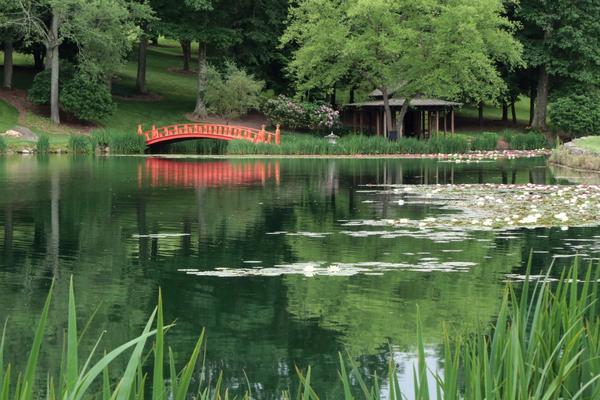
A sprawling Frank-Lloyd-Wright-inspired house sits at the edge of a small lake as the centerpiece of this 50-acre garden paradise in the countryside near Gambier, Ohio. A variety of themed gardens punctuate the grounds, many of them featuring small ponds and streams with waterfalls. Bold, modern sculptures and traditional Asian artworks create an eclectic garden aesthetic.
Schnormeier Gardens remains a private residence that hosts a public open house for twelve days in June. However, I can imagine it one day becoming a year-round destination akin to Longwood Gardens in Pennsylvania or the Huntington in California.
My visit this month to the Schnormeier estate reminded me that gardens are not “natural” in the ways that many people think of the natural world. They are human creations with clear social and cultural influences. One could argue that gardens are as natural as an oil refinery. Sure, living, breathing plants are the essential elements of gardens, not the steel and concrete of
industrial plants. But factories and gardens both serve human purposes.
From a different angle, though, I realize that both gardens and factories are as natural as anything else in nature. Birds build nests, bees make hives, fungi form mycelial colonies, and people construct factories, houses, and gardens. We are as much a part of nature as birds, bees, and mushrooms, and our creations belong to the natural world as much
as their nests, hives, and colonies.
However, a key difference is our awareness of consequences. Unlike other creatures (as far as I can tell), humans know that our activities and creations affect others. We realize that our factories, houses, and even our gardens cause harm to the Earth’s ecosystems.
Arguably, gardens do less harm than a factory,
and they can be beneficial to native inhabitants of the land. A garden can provide food sources for animals, pollen and nectar for bees, wasps, butterflies, and hummingbirds, and water for everyone.
They also heighten our awareness of nature. It’s easy to see the complex interrelationships of the nonhuman world in a garden. Bees pollinate plants while plants offer sustenance to the bees. Deer graze on grasses and
fertilize soils with their droppings, providing nourishment to the grass. Trees shade the understory, making cool, moist spaces for fungi, while mycelial networks facilitate communication among trees and help them absorb nutrients.
The garden is a window into the mystery and wonder of life on earth.
In so many ways, gardens bring us joy. The
inspiring aesthetic of a well-kept garden—whether it be the extravagant layout of a billionaire’s country estate, a simple flower box in the window of an urban apartment dweller, or the exuberant wildness of a forest preserve—can lift one's spirits.
Wishing you a joyful day in a garden paradise,
Tom
Featured Photo
Schnormeier Gardens
(Photo by T.S. Bremer)
Schnormeier Gardens opens to the public Fridays through Sundays in June. Visitors are free to wander the grounds, and photo opportunities abound. The house from across the lake, the gardens, flowers,
sculptures, the bamboo forest, all have delightful visuals for photographs or simple enjoyment. And there are plenty of secluded spots for quiet reflection and meditation.
You can find a slideshow video of my visit to Schnormeier Gardens here on YouTube.
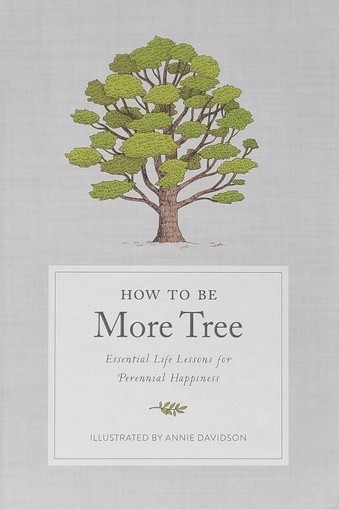
Written byLiz Marvin, Illustrated by Annie Davidson
Trees have been on earth at least a thousand times longer than humans. They carry arboreal wisdom that we might benefit from. This collection shares short lessons from 59 species of trees,
with a drawing of the tree on the facing page. From the small beginnings of the Japanese maple to the enlightened spirituality of the peepal, or “Bodhi tree,” trees share insights gained from their millennia of rooted existence.
At the Ocean
As we approach the summer solstice this weekend, I'm thinking of oceans. This poem starts in beach sand and takes the reader through a summer of ocean, ending with “the waves // steadfast, one after one, faithful unto the last.” Michael Robins has published five collections of poetry,
most recently The Bright Invisible (2022).
Outer Banks
Like a bottle in sand or the scoop of a pelican
not terrible in the least but diving for what fish
float near &, when from the darkness I wake
or await a sign or grow tempted to give over
my life to the ghost crabs, our star like a red whale