Aliens are everywhere. A recent report (on a sports betting site, go figure) tabulated the state-by-state odds of sighting aliens. New Hampshire ranks highest in the United States, with 24 sightings per 100,000 people in the state. Also in the
top ten are Idaho, Vermont, Maine, and Oregon.
Most of the reported sightings don’t involve alien abductions—experiencing something strange that one interprets as aliens differs from actually encountering aliens. Interestingly, although Wyoming ranks eighth for alien sightings, over 25% of Wyoming sightings involve abduction experiences. The Cowboy State is not only a great place to find wranglers; it’s also where to go
to meet aliens.
I've never been abducted or even seen aliens, or so I thought. But a recent conversation has me wondering. After a medical test a couple of weeks ago, the tech warned me not to google my results. He said that when he asked an artificial intelligence (AI) chatbot about his test, it told him that his results showed aliens had abducted him.
We had a good laugh, but after thinking about it, I realized the chatbot was right. We’ve all been abducted by aliens. It wasn’t the medical test that revealed this, but that he was using AI to interpret the results. AI is the alien that has abducted much of contemporary society.
Lately, I've noticed a great deal of commentary and anxiety over the dangers of AI—wrong answers, misinformation, disinformation, and
hallucinations that can take us to dangerous places. Educators are in a quandary over whether students’ use of AI is cheating, or is it a powerful new tool for learning? The ease of fooling people with AI thrills scammers. Mental health professionals worry about the dangers of developing personal relationships with machine learning programs (i.e., AI chatbots).
At the same time, enthusiasm abounds for the potential of AI
to enhance productivity by executing complicated tasks in a fraction of the time. Businesses, governments, and nonprofit organizations are implementing AI to overhaul much of their workflow. And though many critics worry about these machines displacing human workers, organizations find AI is a cost-effective way to expand their capabilities to serve more people without adding more staff.
As I see it, AI is just the next
iteration of the digital revolution that began in earnest in the 1990s when the internet went public. And much like the invention of writing and literacy in the ancient world and Gutenberg’s introduction of mass printing in the 1450s, we cannot foresee the full range of possibilities and pitfalls that AI and digital technologies will bring.
Whatever they might bring, our best escape from the AI alien abductors lies
outdoors. Turning off the devices, setting down the phone, and going out for a hike is still the best way to save ourselves from the digital temptations that have captivated us. As little as 5 minutes a day in nature can change one’s attitude and improve one’s health. So, now’s the time to get up and go outside.
Hoping to see you on the trail,
Tom
Featured Photo
Bears Lodge Tower
(Photo by T.S. Bremer)
The 1977 Steven
Spielberg film Close Encounters of the Third Kind features Devils Tower National Monument as the central location of the story. The plot revolves around an alien spacecraft landing atop this monolithic tower protruding from the eastern Wyoming landscape.
Encounters of a different kind have been occurring at Devils Tower for millennia. It has been a sacred site of American Indian communities for generations. The Lakota people know it as Mato Tipila, or Bears Lodge, a holy site of mythical importance. Along with other Native American groups, they regularly make pilgrimages there, where they perform rituals and
leave offerings.
Ansel Adams bearing witness to injustice: “It is not wrong to seek solace in nature. But we cannot turn a blind eye to injustice,
however far away it occurs.” Ansel Adams in the age of ICE - High Country News
Trout surviving in the desert: “Art and story and the memories of stones together make a kind of prayer. The sand trout consoles us.
Nature adapts, the legend says. Wonder persists.” The Sand Trout’s Rise - Orion Magazine
Hope, morality, and the fragile engine of our planet: “We’re traveling on planet Earth all alone in the universe. This is our spaceship, and nature is the engine that keeps us alive. If we don’t protect it, it’s like allowing the engine to rot away.” Conservation photographer Cristina Mittermeier | Imagine5
Yellowstone bison at Turtle Mound: “Amid polarized politics and ongoing lawsuits, the Fort Peck Tribes’ bison program is one of the longest running in the country, forging
a framework that blends ecological protection and cultural reconciliation while scaling economically.” How the Fort Peck Tribes Build a Bison Blueprint - Mountain Journal
Saving the Midwest's native
seeds: “We’re addressing these local, regional, and national shortages of native seed that are really just hindering our ability to restore really diverse habitats, build green infrastructure, and support urban gardens.” A regional network is racing to save the Midwest's native seeds
| Grist
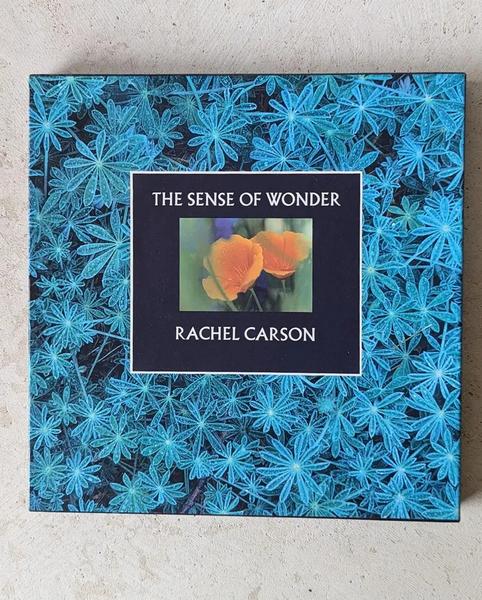
Widely hailed for her book Silent Spring that jumpstarted the modern environmental movement, Rachel Carson was both a scientist and an accomplished writer. Lesser known is her book about instilling lifelong curiosity and wonder in children. She wishes for every child “a sense of wonder so indestructible that it
would last throughout life, as an unfailing antidote against the boredom and disenchantments of later years, the sterile preoccupation with things that are artificial, the alienation from the sources of our strength.” Originally published in Woman’s Home Companion, the essay was inspired by her experience raising her grandnephew, whom she adopted in 1957 following her niece’s death. The 1990 Nature Company edition includes beautiful full-color photographs by nature photographer William Neill.
Springtime Thoughts
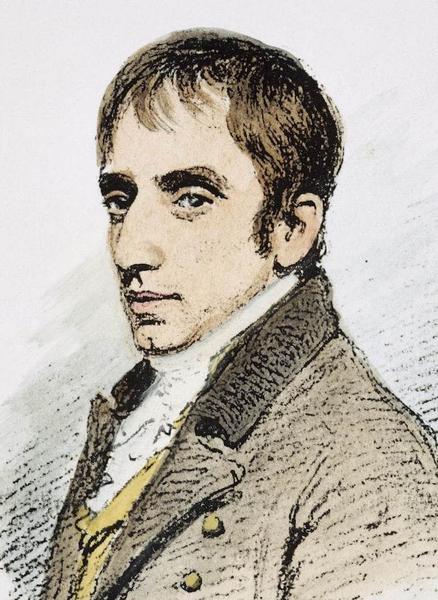
Spring is nearly upon us! This week we reach the vernal equinox, the beginning of spring in the Northern Hemisphere (and the end of summer south of the equator). The English poet William Wordsworth is often credited as a founder of Romanticism, and much of his
poetry considers themes of nature. In his “Early Spring” observations, he contrasts the pleasure and joy of flowers, birds, and “budding twigs” with the sad state of humankind, “What man has made of man.”