I had known that Benito Antonio Martínez Ocasio, a.k.a. Bad Bunny, the Puerto Rican superstar recording artist, was a forceful voice in the cultural struggles that have engulfed the United States and the globe in recent years. But I had never seen him perform nor heard his music. Until halftime at Superbowl LX (which you can watch here).
Like tens of millions of other viewers, I was amazed. The show was beautifully staged and impeccably performed with a cast of hundreds. The spectacle went far beyond mere entertainment. It left me breathless.
Two themes stood out for me (and
for many others who have commented on the Bad Bunny halftime show). Foremost, the joy. Not only joyful to watch, but the entire show reverberated with a celebratory joy that contrasted with the negative, hate-filled, racist-tinged, cynicism of the current Trumpian regime. From the opening strains in the sugar cane fields of Puerto Rico to the final chorus, with the line “Debí darte más beso y abrazo” (“I should have given you more kisses and hugs”), the joys of everyday life in Latin American
cultures shone brilliantly throughout. “Baila sin miedo,” Bad Bunny exhorts viewers, “ama sin miedo” (“dance without fear, love without fear”)
Besides the joy, I marveled at the message of inclusiveness. Bad Bunny envisions a world without borders, where sovereignty celebrates local cultures without dividing and excluding. He exclaims, “God bless America,” and then defines America as “Chile, Argentina, Uruguay, Paraguay,
Bolivia, Perú, Ecuador, Brasil, Colombia, Venezuela, Guyana, Panamá, Costa Rica, Nicaragua, Honduras, El Salvador, Guatemala, México, Cuba, República Dominicana, Jamaica, Haití, las Antillas, United States, Canadá... y mi patria: Puerto Rico.” Each is unique in history, culture, and traditions, but all are part of the greater whole. After reciting this litany of the Americas, Bad Bunny raised up a football bearing white letters announcing, “TOGETHER WE ARE
AMERICA.”
I have long thought of America as a sacred wonderland, a land of holiness framed in wonder. But I've never thought of the United States as exceptional in this or any other way. This nation has its own unique history, cultures, and traditions—just like every other nation in the world. Not better or worse, neither more sacred nor less, certainly not greater than any other country. Just different. And like all
places on earth, the United States is endlessly fascinating. A wonderland of sacredness.
Bad Bunny reminds me that America is an inclusive idea. It encompasses the sacred wonderlands of all the nations of the hemisphere, and also all the nations of the world. No borders, no walls, only bridges to joy.
Wishing you a joyful day,
Tom
Featured Photo
The Virgin River
(Photo by T.S. Bremer)
Large, spectacular waterfalls make great images for calendars, posters, and landscape paintings. But I am charmed by smaller cascades, like this one on
theVirgin River in Zion National Park, Utah. Though often overlooked, these modest waterfalls have their own enchanting appeal. Attending to the small things in life often brings large
rewards.
The poet laureate of Indian activism: “Floyd was a singer and an activist, and certainly, for people my age had
very much to do with our understanding of the place of Indians in American society and how that needed to change. He was, I daresay, the poet laureate of Indian activism in the early 70s.” A closer look into Floyd Red Crow Westerman’s life - ICT
Closed to tourists: Island residents are“making sure that tourism here makes sense, giving back to the local community and supporting nature and culture without eroding it. After all, if incoming tourists destroy its nature and culture, there will be no reason to visit.” How the Faroe Islands are doing tourism on their own terms | Imagine 5
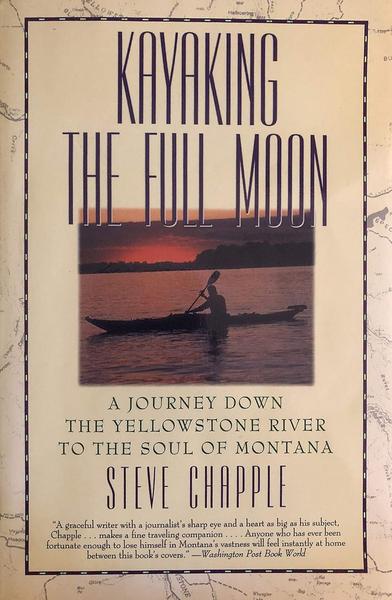
Much of what is written about the Yellowstone River focuses on its scenic beginnings in Yellowstone National Park. But that is only a small portion of what is often called “the longest free-flowing river in the continental United States.” As a rite of passage for returning to his native state of Montana after years of urban living, journalist and author Steve Chapple took his family on a year-long odyssey paddling the river from just outside Yellowstone National Park in Gardiner, Montana, to the river’s confluence with the
Missouri River nearly 700 miles downstream. Though it includes plenty of outdoor adventure, this is not a chronicle of life on a wild river far from civilization. With two toddlers, the journey necessarily involved stays in hotels and a rented motorhome. Along the way, readers meet an assortment of characters, “cowgirls and environmentalists, Cheyenne and Sioux, ranchers, big businessmen, and movie stars.” It’s a colorful portrait of modern Montana and the iconic river that runs through
it.
The Earth’s Silence
I’m an Americanist, trained in American religious history. My book on the history of religions in America begins with questioning the categories of “religion” and “America,” emphasizing that the latter is not confined to the United States. Bad Bunny’s inclusive
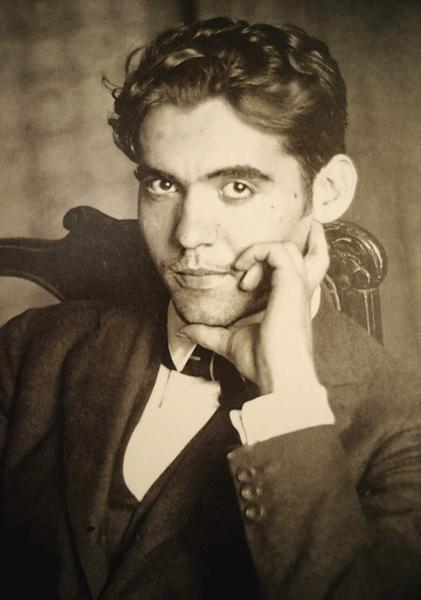
vision inspires me in this newsletter to move beyond the U.S. and include other nations, cultures, and people. With that in mind, this month I feature a poem by the twentieth-century Spanish poet and playwright Federico García Lorca. This short poem (in the original Spanish followed by my translation) expresses a reverence for the
silence of the earth.
El Silencio
Oye, hijo mío, el silencio.
Es un silencio ondulado,
un silencio,
donde resbalan valles y ecos
y que inclina las frentes
hacia el suelo.
– Federico García Lorca
Silence
Listen, my child, the silence.
A rolling silence,
a silence,
where valleys and echoes slide
and that bends foreheads
to the earth.
[Source:Poema del Cante Jondo [Poem of the Deep Song] (1931) by Federico García Lorca.]
I would love to hear from you.
You can reach me by replying to this email or clicking on the Contact button.