This week I watched a mower racing back and forth, back and forth and back again across a large lawn. A wistful twinge of nostalgia surprised me when I saw that young landscape worker with his earbuds and an expression of boredom on his face. It took me back to my days working on
landscape crews.
I spent many hours in my youth on lawn mowers in endless patterns crisscrossing industrial-sized lawns. Back then, we didn’t have earbuds. In fact, I didn’t even have earplugs or other ear protection, which is why I now use hearing aids—it turns out those mower engines are not good for your hearing.
My days as a landscape
worker meant long stretches alone with my thoughts. No music, no podcasts, no Audible books. Just a storm of random ideas and concerns that swept through my brain. Sometimes I composed songs or made up poems, none of them any good. Sometimes I pondered deep philosophical questions, or what seemed deep to my youthful mind. Much of the time my thoughts wandered nowhere in particular.
In retrospect, sitting on those lawn
mowers was more mind-freeing than mind-numbing, a sort of daylong meditation session. Of course, most of it involved what serious meditators call “monkey mind,” an uninvited storm of random thoughts. But now and then, some profound insight would light up my spirit.
I learned great life lessons as a laborer. Among them is the fugitive truth that no moment is ever wasted. Mind-numbing work can instill an appreciation for
contemplative practice, and long stretches alone with your thoughts often bring profound insights and new perspectives.
But if you’re doing it on a lawn mower, use earplugs. You will be thankful in your later years.
Kind regards,
Tom
P.S. You may have noticed that for the first time since starting this newsletter 30 months ago, I did not send it on the third Monday of the month. I’m trying out the third Thursday to set you up for some weekend reading. Also, I am overhauling the Sacred Wonderland website. I needed to change hosting services and decided on a simpler format. I expect to complete the changeover within the next week. The URL address will remain www.SacredWonderland.US and www.tsbremer.com for my bio.
Featured Photo
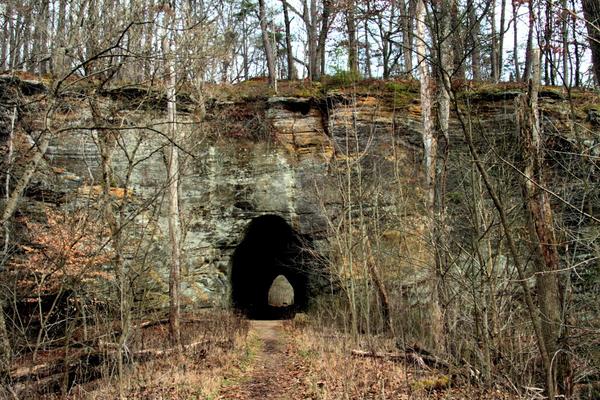
Blackhand Gorge Tunnel
(Photo by T.S. Bremer)
I've begun work on a series of essays about the history of trails I‘ve hiked. The “Every Trail Has a History” series is not a trail guide or reviews of hikes. Instead, I share my experience of the trail while discussing its history or a historical theme related to the trail.
The first essay in
this series is on the Canal Lock Trail in the Blackhand Gorge State Nature Preserve near where I live in Ohio. It recounts the evolution of transportation evident on the trail—from ancient footpaths to dugout canoes,
canals, trains, planes, and GPS satellites. A highlight is the 300-foot tunnel shown here. Workers used dynamite to blast through sandstone for an early-twentieth-century interurban railway.
The essay appeared in The Reporting Project, a local publication. You can read a slightly expanded version on Medium.
News, commentary, and other items of interest
Debunking climate misinformation: “Getting your head around climate change means navigating a lot of dodgy information.” Six climate myths, busted | Imagine5
The lowly fly, a spiritual teacher: “It turns out that dwelling in respect rather than rage is a much more enjoyable way to live — for me and, I imagine, for those around me, too, including these masters of decay and
flight.”How I learned to stop worrying and love flies - High Country News
Rivers, lakes, and waterfowl: “ ‘Said the river: imagine everything
you can imagine,’ Mary Oliver wrote, ‘then keep on going.’” By Water, By Wing - Orion Magazine
Sustainable agriculture revolutionaries: “With rebuilt soil health and boosted biodiversity, regenerative farmland
produces measurable ecological restoration: a healthy population of pollinators bumbling from flower to flower; crumbly, rich, chocolate cake-like soil; and nutrient-dense food free of synthetic chemicals.” Regenerative Revolution: Working the land as a form of resistance - Orion Magazine
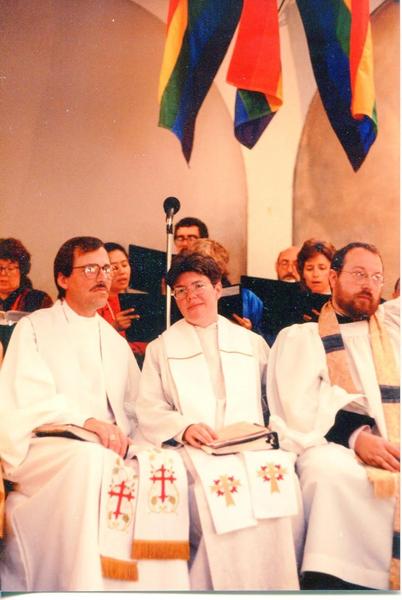
I am thrilled that my friend Lynne Gerber and her collaborators will be in Beverly Hills this weekend to receive a Peabody Award. This most prestigious honor in the podcasting world is for their outstanding documentary “When We All Get to Heaven.” It “tells the story of one of the first gay-positive churches, the Metropolitan Community Church of San Francisco, and how it faced the personal, social, and political trials of the AIDS epidemic, including the deaths of 500 of its members.” The story is emotionally intense, but with plenty of humor and celebration to go along with the
grief and anger. You can listen on the Eureka Street Productions website or download it wherever you get podcasts.
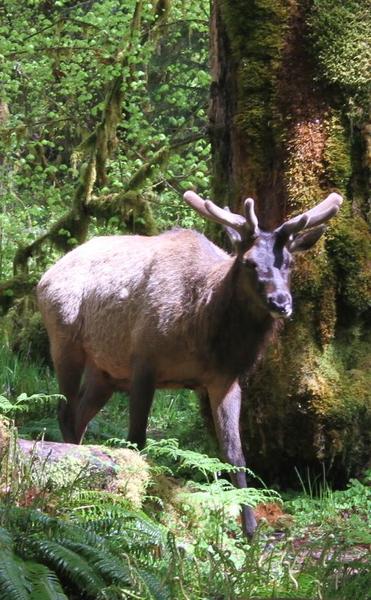
Love among the elk
Irene Han’s two poems in the current issue of Orion Magazine amazed me. Unfortunately, I found nothing about the poet to share with you. The magazine’s contributor note says only, “Irene Han is a writer from the Bay Area. She is currently a poetry fellow at
the Michener Center for Writers. Her work has appeared in The Cortland Review.” So, this month we enjoy this lovely hiking poem about elk and love from a poet with outstanding talent.
Tomales Point
Unlifting,
the fog, rice paper translucent, hid the ghostly bodies of the tule elk, disarming, statuesque,
a bachelor herd.
We had not yet noticed, hiking
the ridge crest of the narrow peninsula on an old ranch road, the air salt-edged,
a seance of waves transpiring so far below the impenetrable clouds we could not see.
Yet there they stood,
the whole herd male, their antlered heads clarified without moving
as the shroud drew back.
Without knowing
it was just past peak rut, time when elk mate, I called out for you to look,
believing love meant two minds as one, I wanted you