My book Sacred Wonderland: The History of Religion in Yellowstone recounts the story of the world’s
first national park. I wrote it while living and teaching in Memphis, Tennessee, a place as different from Yellowstone as one can imagine: an intensely urban, impoverished, and crime-ridden city far from the wild lands and natural wonders of Yellowstone. Yet, despite the contrast, I think of both as examples of the American sacred wonderland.
Like the nation as a whole, Memphis is a product of long, torturous histories involving the displacement of indigenous people, violent racial conflicts, deadly epidemics, and economic
exploitation. Yet, despite its unsavory past and intractable social problems, Memphis has survived and continues to flourish on the bluffs overlooking the Mississippi River.
Nature also flourishes in Memphis. The trees that line the parkways and shade the neighborhoods impressed me when I first came to the city in 2001 to interview for a job at Rhodes College. Wildlife lives alongside the human visitors in the city parks
and nearby state parks. A long growing season fills the yards and gardens of Memphis residents with abundant flowers, vegetables, and thriving greenery.
Though not “wilderness” in the manner of Yellowstone and other places of untrammeled nature, Memphis epitomizes a different sort of wildness. Nature persists at the wild edges of the urban environment, while the civilizing forces of society never quite extinguish the wild
heart of the human animal. We are still very much part of the natural world, even in the intensely urban confines of places like Memphis.
Kind regards,
Tom
Featured Photo
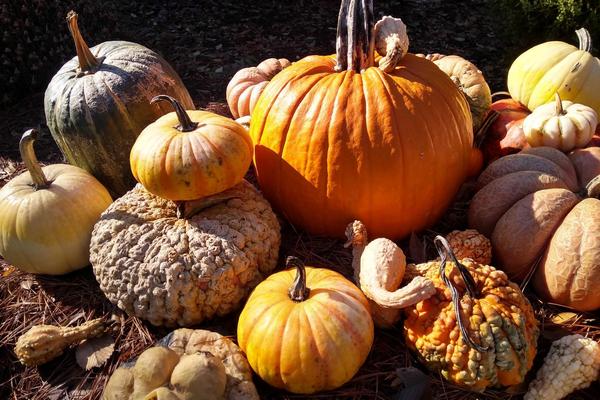
Pumpkins
(Photo by T.S. Bremer)
Autumn is the season of harvest, when crops of all sorts are brought in from the fields. No crop says autumn better than pumpkins and other gourds. It doesn’t take much
effort to make a colorful display from a stack of pumpkins.
News, Commentary, and other items of interest
Lessons from sandhill cranes: “We can leave behind some wisdom, so those who replace us may know that we ran our course through light and dark and tried to run it well.” Darkness and Light - Mountain Journal
Planting a wildflower
garden: “Reds, oranges, purples, and a single proud sunflower. Stepping closer, I saw that the whole patch was alive with bees and other insects.” My garden just got wild | Imagine5
Wisdom from Jane
Goodall: “How should the mind that can contemplate God relate to our fellow beings, the other life-forms of the world? What is our human responsibility?” In the Forests of Gombe - Orion Magazine
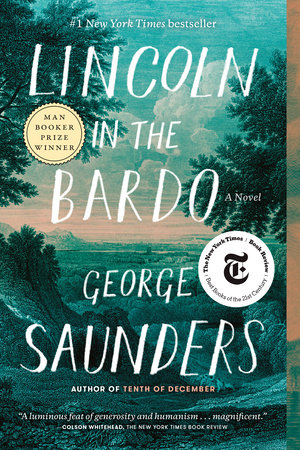
While doing research for the National Park Service at the Lincoln Home National
Historic Site, I read George Saunders’ book about Abraham Lincoln’s mourning of his 11-year-old son Willie, who died in the White House in 1862. It imagines Lincoln visiting Willie’s tomb during his son’s bardo, the Tibetan Buddhist notion of a period after death before reincarnation to a new life. The novel is a fictional imagining of the afterlife, but as I read it, I started recognizing quotations from historical sources I was reading at the time. For chapters recounting this side
of death, Saunders compiles snippets of primary sources to portray the time around Willie’s death. As the Kirkus review explains, “Saunders deftly interweaves historical accounts with his own fragmentary, multivoiced narration as young Willie is visited in the netherworld by his father.” It’s like no other story I've
read.
Musings of a jack-o'-lantern
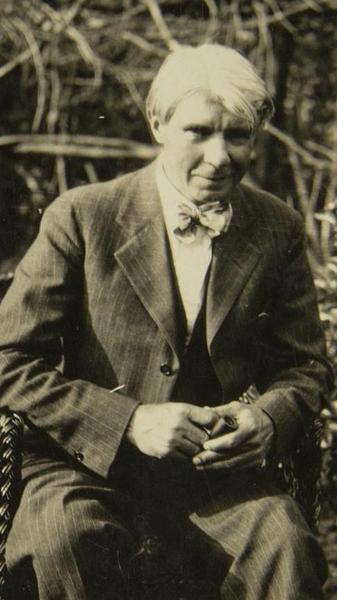
Carl Sandburg, was a bit of a renaissance writer, accomplished in five fields—poetry, history, biography, fiction, and
music—and he received Pulitzer prizes in both poetry and history, the latter for his massive biography of Abraham Lincoln. Sandburg‘s prolific literary output included works for children, and in some of his work he harbored a childlike outlook. His poem featured here imagines a pumpkin’s view of children celebrating
Halloween.
Theme in Yellow
I spot the hills
With yellow balls in autumn.
I light the prairie cornfields
Orange and tawny gold clusters
And I am called pumpkins.
On the last of October
When dusk
is fallen
Children join hands
And circle round me
Singing ghost songs
And love to the harvest moon;
I am a jack-o'-lantern
With terrible teeth
And the children know
I am fooling.
– Carl Sandburg
[Source: Chicago Poems by Carl Sandburg (1916).]
I would love to hear from you.
You can reach me by replying to this email or clicking on the Contact button.