U.S. national parks are under attack. The Trump administration has included severe downsizing of the National Park Service in its plan to fund the "big beautiful" tax cuts for the wealthiest Americans.
The National Parks Travelerreports the parks will suffer cuts amounting to more than $1 billion. Theresa Pierno, National Parks Conservation
Association (NPCA) president and CEO, calls it "the most extreme, unrealistic and destructive National Park Service budget a president has ever proposed in the agency's 109-year history."
If the budget wins approval, national parks across the country will have to curtail many of the programs and services that visitors have come to expect. Fewer hours at visitor centers, elimination of ranger-led hikes and
education programs, abandonment of new construction projects, and cancellation of climate-change mitigation efforts are some of the cutbacks that the NPCA and other national park organizations have warned about.
This may not be the best year to visit national parks. State parks may be a better option. They can be as impressive as national parks, and most state parks are less crowded than the most popular national
parks.
Last week, Melanie and I visited one of our favorite state parks, Mount Magazine in Arkansas. It's the highest point in the state and has spectacular views. And with more than 14 miles of hiking trails in the park, there are plenty of opportunities
to get out and stretch your legs. They even have a hang-glider launch site, though the only gliders we've seen are the many vultures that survey the forests for a meal.
There are nearly 2,500 state parks in the United States. Every state has them, from only 11 in Nebraska to 270 in California. There's probably one near you. So if you prefer to hold off visiting Yellowstone, Yosemite, Great Smoky Mountains, Acadia, or any
other national parks until we see the fallout from the proposed cutbacks, you can still enjoy the outdoors at a state park.
Kind regards,
Tom
P.S. To learn more about the threat to national parks and to get involved in protecting them, check out these organizations:
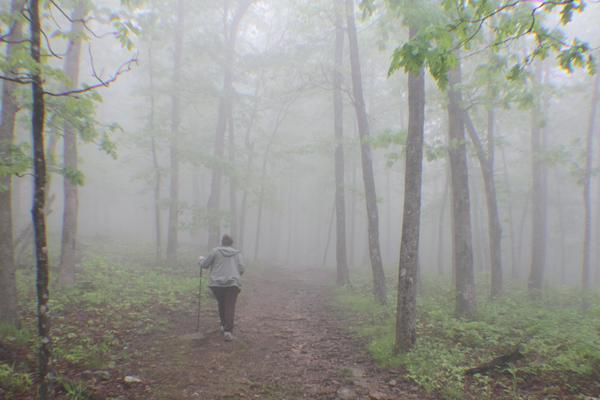
The Signal Hill Trail in Mount Magazine State Park leads to the highest point in Arkansas. It’s an easy loop of just under 2 miles, a popular hike with access from both the lodge and the campground. When we hiked it last week in the early morning, the forest was shrouded in fog.
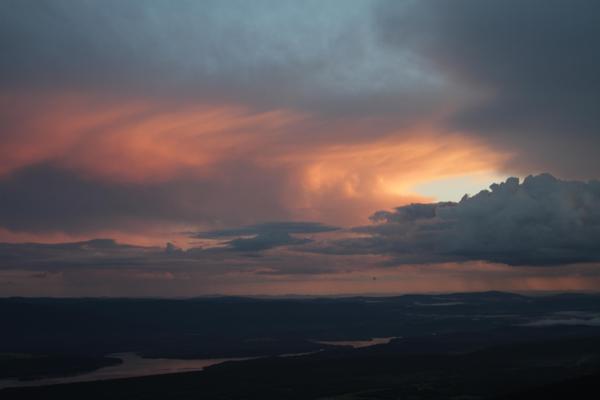
Sunsets are usually spectacular from Mount Magazine. Clouds and distant rain showers enhance the crepuscular show, as seen here looking across the valley of the Petit Jean River and Blue Mountain Lake.
The unnatural nature of gardening: "It isn’t easy, gardening. Any force applied to the project of making something grow is met with an array of opposing forces." Force | Orion Magazine
Wisdom from Jane Goodall: "It’s only western science that has been so divorced from the natural world. If you go to indigenous people, or Buddhists they completely understand that we’re one with nature." Jane Goodall Interview | “Change starts within" -
Imagine5
Caring for the planet also boosts your well-being: "We know empirically that being in safe and beautiful natural settings is really good for our physical and mental health." Advice on dealing with eco anxiety | Imagine5
Lessons from LGBTQ elders: "Radical change meant organizing." LGBTQ Elders Share Wisdom for Surviving Authoritarianism |YES!
Magazine[Sadly, YES! Media is closing operations next month. After 30 years of inspiring people to build a more just, sustainable, and compassionate world with "rigorous reporting on the positive ways communities are responding to social problems and insightful commentary that sparks constructive discourse," they
will be missed.]
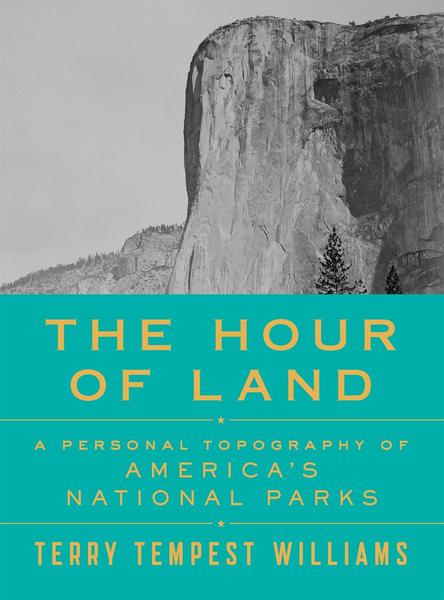
Terry Tempest Williams offers an intimate portrait of national parks in her memoir The Hour of Land: A Personal Topography of America’s National Parks. She
guides readers on a reverential tour of parks, revealing the meanings these places have etched in her memory and experience. Family, beauty, creativity, a care for land all rank highly in the values she finds in national parks. Williams gives the final words to her friend Doug Peacock, the Vietnam war veteran who found solace and a renewed life in the company of
grizzly bears: “We lose nothing by loving.”
Wild Geese Calling
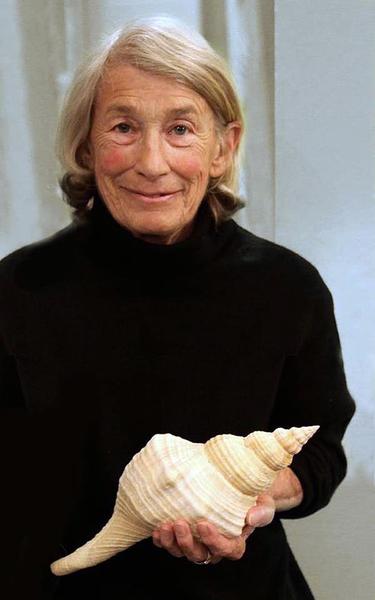
Anyone who loves nature and loves poetry probably loves the work of Mary Oliver. As poet Maxine Kumin noted, Oliver was an “indefatigable guide to the natural world.” She received some of the highest accolades of the literary world, having earned the Pulitzer Prize,
the National Book Award, and a Lannan Literary Award for lifetime achievement. Oliver found refuge in nature at a young age, and she wrote with visionary insight about the intersections of the human and non-human worlds. In one of her more well-known poems, “Wild Geese,” Oliver offers the reassurance of nature in times of despair. She counsels the reader “to let the soft animal of your body love what it loves.”
Wild Geese
You do not have to be good.
You do not have to walk on your knees
for a hundred miles through the desert repenting.
You only have to let the soft animal of your
body
love what it loves.
Tell me about despair, yours, and I will tell you mine.
Meanwhile the world goes on.
Meanwhile the sun and the clear pebbles of the rain
are moving across the landscapes,
over the prairies and the deep trees,
the mountains and the
rivers.
Meanwhile the wild geese, high in the clean blue air,
are heading home again.
Whoever you are, no matter how lonely,
the world offers itself to your imagination,
calls to you like the wild geese, harsh and exciting -
over and over announcing your place
in the family of things.
—Mary Oliver
I would love to hear from you.
You can reach me by replying to this email or clicking on the Contact button.