I have been working on an essay that features my climb at age 11 to the summit of Mt. Whitney in California, the highest peak in the contiguous United States. Recalling that long ago adventure brought to mind a poem I wrote a year or two later. Like nearly all
adolescent poetry everywhere, it had little literary merit (though it did win a contest for high school poets).
I don’t think I have that poem anymore, but I remember the gist of it, and I've never forgotten the final two lines. It was titled On Top Now, and it had several stanzas about climbing a mountain: passing through forests and across alpine meadows, higher and higher up the mountain. Then, reaching
the peak, the mountaineer meets disappointment, an anticlimactic achievement after the long, hard trek up the mountain. The poem ended, “Life lies not on the peak // but on the trail.”
Now that I have arrived to the anticlimactic later phase of my life’s climb up this daunting mountain of life, my adolescent wisdom seems more insightful than I understood in my younger life. The glory of conquest in summiting great
mountains, I now realize, is an illusion. Striving for career success, accumulating wealth, influencing public opinion, reaching the pinnacle of all undertakings are all illusory desires.
I have learned over the decades that living every day as it comes, embracing the unexpected opportunities that life presents, connecting with all sorts of people, loving those close to me, relishing my passage through quiet forests
and across flowered meadows, drinking deeply from glacier-fed streams—for me, these have been the ingredients of a fulfilling life.
Certainly, I've not always lived up to the aspirational ideal of accepting and valuing every twist and turn in life’s journey. Those who know me well will have plenty of examples of where I’ve fallen short. But I’m still out here on the trail making the best of it.
I wish for you a joyful passage on the trail of your life’s journey.
Kind regards,
Tom
Featured Photo
Hiking the Hoh Rainforest
(Photo by T.S. Bremer)
Mt. Whitney was the last mountain I ever climbed. As I explain in the essay I'm writing, I discovered my terror of high places on that
hike. Since then, I much prefer long hikes through wild forests, such as this trail through the Hoh Rainforest in Olympic National Park on the Olympic Peninsula of Washington state. You can view the Olympic photo gallery here.
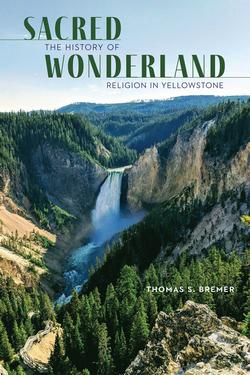
Now available from the University of Nebraska Press:
Sacred Wonderland: The History of Religion in Yellowstone
Maine's Wild Seed Project: "The more we can reach within ourselves and lead with the generosity of spirit that these plants embody, the better equipped we will be to build more resilient
landscapes in the face of environmental change." The Wild Seed Project | Gardeners unite in a growing movement
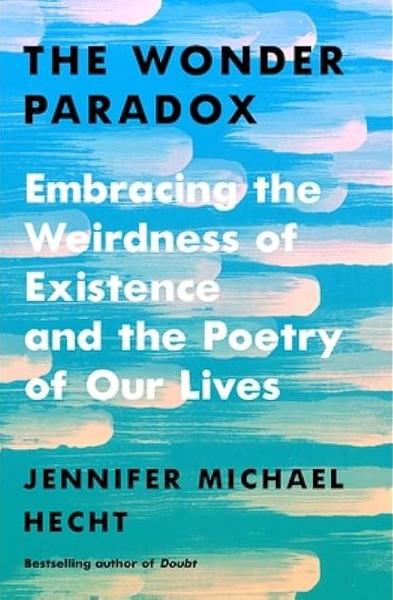
Some religious studies scholars have suggested that ritual was the beginning of all religions. The human need for regular, practiced behavior seems baked
into our DNA. Many people who give up on organized, institutional religion say what they miss most are the rituals. Jennifer Michael Hecht proposes poetry to become the new ritual practice for those she calls the “interfaithless...the nonreligious who feel positively connected to others through that identity.” She writes, “Poetry may well be the best art to organize our hearts in the absence of religion because of its shared traits with prayer and meditation.” I would add that it’s not only for
the nonreligious; even the faithful will find that poetry adds new insights and novel ways of engaging with their religion.
The Meaning of Grass
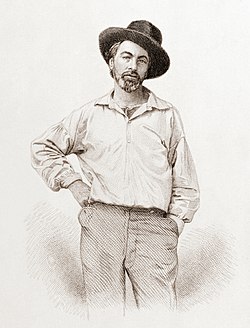
Just about everyone who knows anything about poetry, at least in the United States, has heard of Walt Whitman, and most have read something from his
Leaves of Grass collection. I first learned about him and his poetry in elementary school when I wrote a term paper on Leaves of Grass. I don’t remember what I wrote, and I doubt at that early age I grasped the significance of his literary contribution. Nevertheless, Whitman’s poetry has been with me a long time. One of his most quoted poems is Song of Myself, a sprawling meditation on the self in a changing nineteenth-century American world. It remains remarkably relevant
even today. This excerpt is the opening poem in the canonical collection The Ecopoetry Anthology. It is a fitting entry into the universe of ecopoetics.
from Song of Myself (section 6)
A child said What is the grass? fetching it to me with full hands;
How could I answer the child? I do not know what it is any more than he.
I guess it must be the flag of my disposition, out of hopeful green stuff
woven.
Or I guess it is the handkerchief of the Lord,
A scented gift and remembrancer designedly dropt,
Bearing the owner's name someway in the corners, that we may see and remark, and say Whose?
Or I guess the grass is itself a child, the produced babe of
the vegetation.
Or I guess it is a uniform hieroglyphic,
And it means, Sprouting alike in broad zones and narrow zones,
Growing among black folks as among white,
Kanuck, Tuckahoe, Congressman, Cuff, I give them the same, I receive them the
same.
And now it seems to me the beautiful uncut hair of graves.
Tenderly will I use you curling grass,
It may be you transpire from the breasts of young men,
It may be if I had known them I would have loved them,
It may be you are from old people,
or from offspring taken soon out of their mothers' laps,
And here you are the mothers' laps.
This grass is very dark to be from the white heads of old mothers,
Darker than the colorless beards of old men,
Dark to come from under the faint red roofs of mouths.
O I perceive after all so many uttering tongues,
And I perceive they do not come from the roofs of mouths for nothing.
I wish I could translate the hints about the dead young men and women,
And the hints about old men and mothers, and the offspring taken soon out of their laps.
What do you think has become of the young and old men?
And what do you think has become of the women and children?
They are alive and well somewhere,
The smallest sprout shows there is really no death,
And if ever there was it led
forward life, and does not wait at the end to arrest it,
And ceas'd the moment life appear'd.
All goes onward and outward, nothing collapses,
And to die is different from what any one supposed, and luckier.
– Walt Whitman
[Source: This excerpt appears, with minor spelling and punctuation differences, in the first edition of Whitman’s Leaves of Grass in 1855. He divided the poem into sections with the fourth edition (1867), when this became section 6. The title, “Song of Myself,” first appeared in the sixth edition of the book in 1881-82.]
I would love to hear from you.
You can reach me by replying to this email or clicking on the Contact button.