Anyone who has spent much time with me knows I don't eat mushrooms. When asked why, I have to choose between two answers. The true one – I can't stomach the taste – often earns me a slight scoff with an implicit moral judgment on my character. As if there's something
wrong and untrustworthy about someone who doesn't like mushrooms. So, I usually resort to a safer explanation: allergies. Everyone seems to accept that answer without question. No one can blame you for a medical condition. I keep my moral character intact by telling a small lie.
Lately, I've found a better explanation for not eating mushrooms. They likely will be the survivors who will perpetuate life in the face of
climate disruptions and environmental collapse. I subscribe to Orion Magazine (which I highly recommend for its outstanding collections of superb writing, excellent artwork, and poetic commentaries on "Nature and Culture"). Their summer issue features mushrooms, or fungi more generally. I learned a great deal about the fungal kingdom. The stories carried me from
loathing mushrooms to loving them.
Truth be told, I've never hated mushrooms as living organisms. I find them quite beautiful. It's their taste and texture I could never swallow.
In the Orion collection, I learned that mushrooms are both alluring and deadly, but that we know relatively little about them. Scientists estimate that as many as
95% of fungal species have not yet been identified.
What we do know is pretty remarkable. Some species of fungi, reports Meera Subramanian, are among "the largest and oldest beings on Earth; they can span miles across and live for thousands of years." Moreover, they live
everywhere, from snow-packed mountaintops to superheated hydrothermal vents at the bottom of the ocean. Mushrooms have been used as metaphors in literature and have appeared as main characters in movies. Not shabby for organisms that prefer the dark and live mostly underground.
I now realize that mushrooms are special creatures with remarkable superpowers. Which means, when someone asks why I don't eat them, I can say
it's because mushrooms are sacred. I now question the moral character of anyone who eats them.
But if someone won't agree that mushrooms deserve pious respect, I can always go back to my allergy answer.
Kind regards,
Tom
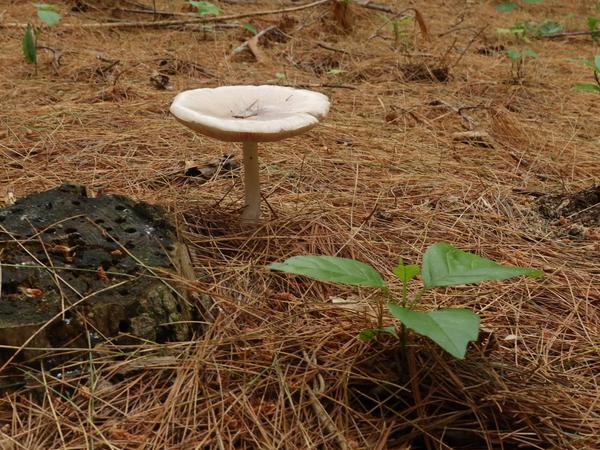
Featured Photo
A Buddhist Mushroom
(Photo by T.S. Bremer)
We often travel between Memphis and Ohio, and one of our favorite places to stay over is Bloomington, Indiana. While there, we always visit
the Tibetan Mongolian Buddhist Cultural Center (TMBCC) . The grounds and the temple have a calming atmosphere, a welcome break from long days of driving. Several years ago, I came across this mushroom at TMBCC pushing up through the pine needles between the stupa and the prayer wheel shrine. I couldn't help wondering about the kind soul who
had reincarnated as a fungus on this holy ground. They must have had a surplus of positive karma to enjoy such good fortune.
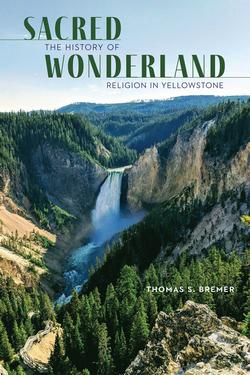
Now available from the University of Nebraska Press:
Sacred Wonderland: The History of Religion in Yellowstone
Revisiting Noah and the Ark in Kentucky: “Build an ark,” God said. “Save a little for me to remember you all by. Keep it all warm and dry and partnered.
Don’t let anything get too lonely, too heartbroken, again.” Mothership | Image Journal: Art-Faith-Mystery
Reconnecting to land and community in America's hottest city: If Phoenix is to become livable for all its people, its salvation may well be found in these backyard plots and community gardens, “where Black hands, young and old, turn the earth not just to survive, but to thrive together.” Beneath the blazing sun, Black Phoenix sows community - High Country News
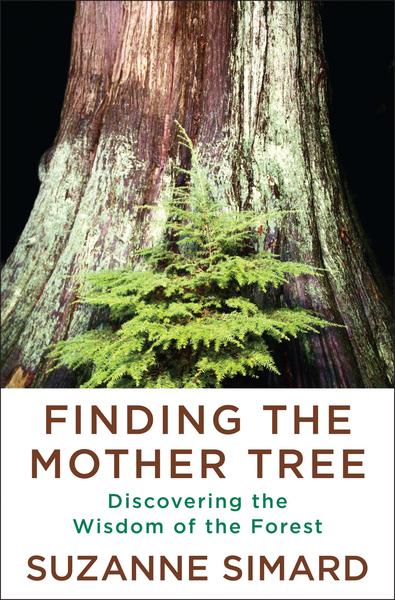
We have Suzanne Simard to thank for much of what science now knows about how trees communicate with each other in a forest. Her groundbreaking research opened the way for understanding
how networks of fungi facilitate the exchange of information and resources among trees. In this memoir, Simard recounts her family’s history of logging in Canadian forests and her work as one of the first women in the logging industry. Her personal story intertwines with her discoveries about the interdependence of trees and fungal mycelia that are crucial to healthy forests.
A Mushroom Tattoo
Rob
Spillman describes himself as a writer, editor, teacher, and literary citizen. He co-founded and edited the literary magazine Tin House, which published from 1999 to 2019. Since then, he has stayed busy with his own writing projects. In this poem, which appears in the Summer 2025 edition of Orion Magazine, he finds kinship
with mushrooms and tree spirits.
Fading Tattoo
Chanterelles and red caps are cut into the skin over my right wrist dancing with my pen as if windblown Kodama, wide-eyed tree spirits, peek out between the tattooed stems
Yesterday, after the rain, the trail slick and steaming, dusky orange caps pushed through
false yellow foxgloves, waving me over to cut them down with my worn, weathered Opinel, the forest gifting me a favorite meal
Today, the same trail, same spirits watching my slow, steady progress up the sun-spotted escarpment, the dogs cooling in every pool and puddle, no hidden forest gifts, curved blade locked in place, tucked in my pocket
The tattoo barely bled the ink is weathered by the sun, the slow fade will keep fading until my spirit joins the spores and spirits of the forest