This political season has me thinking about truth, lies, and faith. Controversy surrounds the many falsehoods espoused by the
Republican presidential candidate. Fact-checking has become a regular feature of reporting on his campaign. But his followers believe him as a matter of faith.
In my years of teaching American religious history, issues of fact versus faith often came up in classroom discussions. Many times, these issues related to the contrast between science and religion. Students frequently assumed objective science and religious faith
contradicted each other and were always in conflict.
Many eventually realized that science and religion are both legitimate in their respective contexts of truth. Modern science relies on verifiable facts. Scientific methods seek to verify or falsify hypotheses.
In contrast, faith claims are neither verifiable nor falsifiable. As a typical
example, scientific experimentation can never prove or disprove the existence of a deity. To believe or disbelieve that God exists is a matter of faith.
I sometimes have to remind myself about the validity of faith claims. In my research, I often came across beliefs that seemed preposterous to me. Though I found these ideas easy to dismiss, who am I to judge? Religious convictions that cannot be verified or falsified
are true for believing communities.
On the other hand, most claims made by politicians can be easily verified or falsified. It doesn’t take much investigating of facts to know that Joe Biden won the presidency fair and square in 2020. Or that most immigrants to the United States are not criminals—they are hard-working, law-abiding people who want nothing more than to provide for their loved ones. Also, there have been no
credible reports of Haitian immigrants stealing pets in Springfield, Ohio. These facts are easily verifiable.
I hope at election time, American voters will put their faith in verifiable facts. Democracy depends on a discerning citizenry when it comes to choosing our leaders.
Kind regards,
Tom
On Medium
I have posted a number of new stories on Medium. Below are the two most popular ones over the last month. You can find links to other posts on the Sacred Wonderland website.
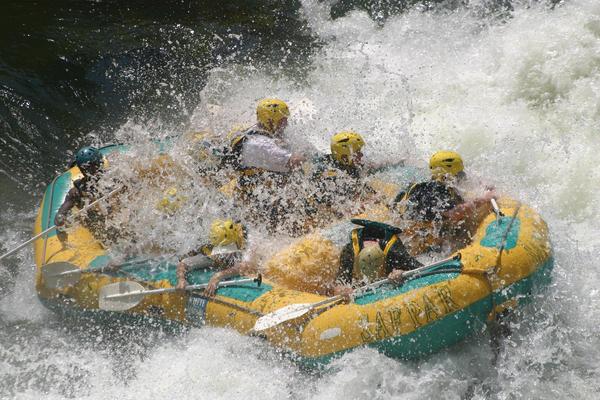
Falling into the Elk River | Life lessons in the Canadian
wilds: Trapped beneath the raft after falling into the roiling waters of the Elk River in British Columbia, I couldn't know if I would return to air, sun, or life again. Afterward, I realized a new understanding of life.
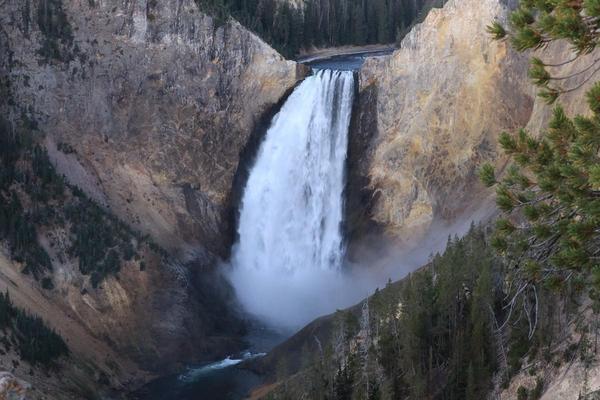
The Grand Canyon of the Yellowstone River | Meditation on a natural
wonder: I lived at Canyon Village in Yellowstone National Park for five months in 1978. While there, I often hiked to the rim of the Grand Canyon of the Yellowstone River to contemplate the expanse of the scene at dawn. This is my second-person recollection of the canyon and the wisdom that it taught me
Featured Photo
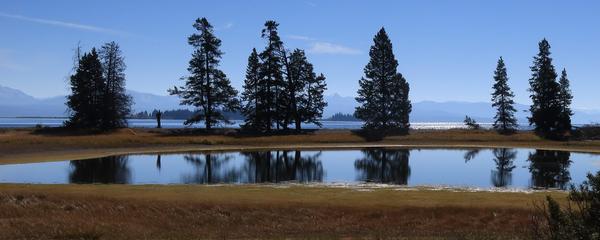
Carrington Island, Yellowstone National Park
Autumn is my favorite season in Yellowstone. With fewer people in the park and weather that is usually warm during the day and chilly at night, it’s an ideal time to visit. The forests put on a colorful show with the aspen trees
turning gold. The wildlife become more active with the elk rutting season and other animals preparing for winter. This image from the shore of Yellowstone Lake’s West Thumb shows tiny Carrington Island framed by autumn colors with Mount Sheridan (elevation 10,308) looming in the background. You can view other Yellowstone photos on the gallery page.
Taking a stand for environmental
justice. "Across the country and globe, young people are filing lawsuits to try to hold governments and companies accountable for their role in promoting climate change." Environmental Justice as Birthright (yesmagazine.org)
A book worth reading:
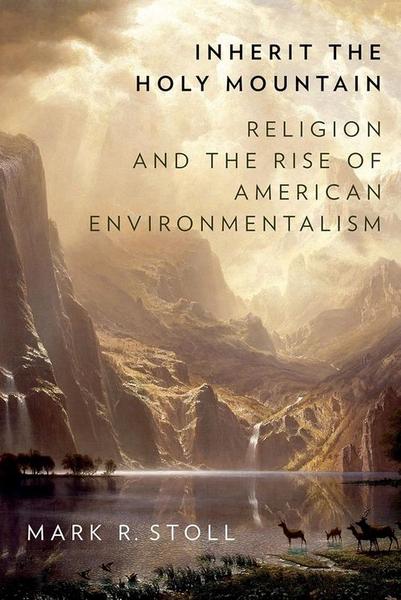
Inherit the Holy Mountain: Religion and the Rise of American Environmentalism by Mark Stoll
This book reveals how environmentalism in the United States is rooted in Protestant
Christianity. Stoll’s history of the American environmental movement weaves together US religious history and environmental history. He documents how Calvinism was a key element in the beginning of a uniquely American environmentalism. He emphasizes that many of the major environmental figures prior to the 1960s "grew up in just two denominations, Congregationalism and Presbyterianism, both in the Calvinist tradition” (2). Not only an intellectual and religious history, Stoll also attends to
popular culture, from early nineteenth-century landscape painters like Thomas Cole to twentieth-century photographer Ansel Adams and even the popular recording artist John Denver.
A Pilgrim Rose
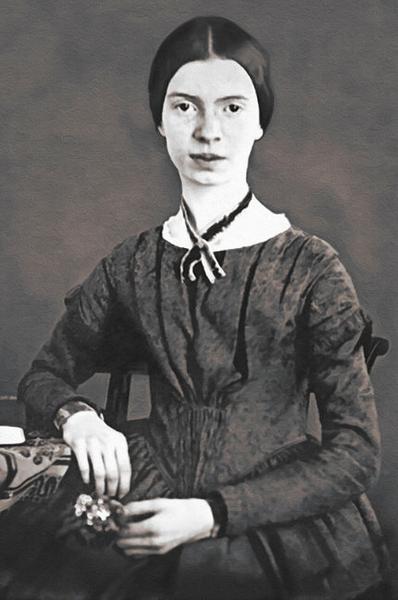
Emily Dickinson has been praised as “one of America’s greatest and most original
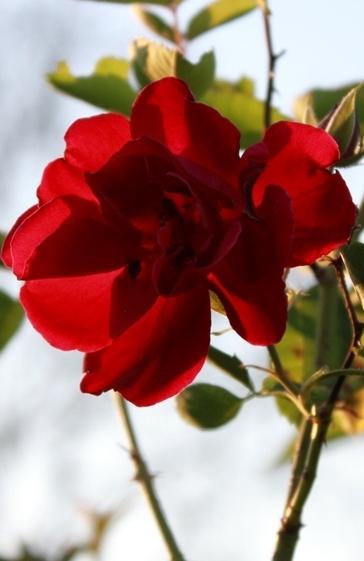
poets of all time.” Her interest in the sciences, especially botany, made her a keen observer of nature, which she often took as a theme in her poetry. In one of the few poems published during her lifetime, she contemplates a small rose that the poet has picked. The poem defies a human-centered view of nature by noting how the rose will be missed by bees, butterflies, birds, and the breeze. It ends by acknowledging the fragility of life.
Nobody knows this little rose
Nobody knows this little rose; It might a pilgrim be, Did I not take it from the ways, And lift it up to thee! Only a bee will miss it; Only a butterfly, Hastening from far journey, On its breast to lie. Only a bird will wonder; Only a breeze will sigh; Ah! little rose, how easy For such as thee to
die!
– Emily Dickinson
[First published in the Springfield [Massachusetts] Daily Republican, August 2, 1858.]
I would love to hear from you.
You can reach me by replying to this email or clicking on the Contact button.